Language

In an industry driven by precision and adherence to regulations, even the slightest oversight can lead to significant disruptions. Despite advancements, human error remains a significant factor in travel authorisation issues, ranging from denied check-ins to border refusals."
So, the question is no longer if we can remove human error from this process, but rather: Why haven’t we done it already?
Airline and ground staff are tasked with making real-time decisions based on complex, evolving travel regulations, immigration rules, visa conditions, health requirements, and carrier obligations. We expect them to be fully knowledgeable in all of it, instantly, and under pressure.
The issue is not a lack of dedication. The issue is a process that leans too heavily on human interpretation and memory, in an environment where rules can change daily.
The simple exhaustion of working at scale. Employees working under great stress and pressure ensuring on time departures, meeting SLAs.
Mistakes, sometimes small, sometimes with significant operational and financial consequences.
When a traveller is wrongly denied boarding or mistakenly allowed to travel without proper authorisation, the fallout can be severe:
Human error, in this context, becomes an expensive liability - one that grows as regulations multiply, and passenger volumes increase year on year.
Despite the availability of modern digital tools, many authorisation checks still rely on:
In an age where we can track baggage in real time and use facial recognition for boarding, it’s astonishing that many compliance decisions still rely on human best guess.
This is not a lack of technology - it is a lack of prioritisation.
Removing human error does not mean removing people. It means removing unnecessary risk from people by giving them smart, connected tools that:
This is not a theoretical future. It’s happening today, and it’s helping carriers and governments make better, faster, more accurate decisions, consistently and at scale.
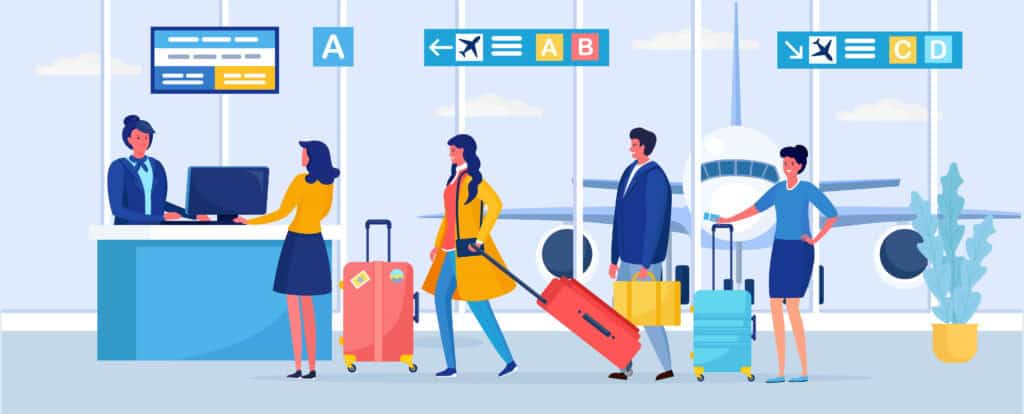
As we look to the future of aviation, increased automation, increased connectivity, means the pressure to deliver seamless journeys will only grow.
Passenger expectations are rising. Regulators are tightening controls. And staff are being asked to do more with less.
In this environment, tolerating manual error in authorisation checks becomes a business risk we can no longer justify.
Removing human error is not just a technical challenge, it’s a mindset shift.
We need to stop treating authorisation as a task for individuals to ‘get right’ and start treating it as a compliance system to design correctly.
That means:
Ultimately, the industry must ask: If we can offer passengers digital boarding passes, biometric security, and contactless everything - why do we still ask agents to guess if someone can legally travel?
This isn’t about replacing humans. It’s about removing the burden of failure from them.
We now have the tools to eliminate ambiguity from the travel authorisation process. The only thing left is the will to act. Because the real risk is not automating too much, it is in continuing to accept a status quo that fails travellers, staff, and the business alike.
Let’s stop tolerating uncertainty where certainty is possible.

If your airline is still relying on manual decisions, we can help you reduce risk and increase accuracy.
Discover how TravelDoc automates compliance at scale.

Written by Jason Spencer, Commercial Director, ICTS Europe Systems


"*" indicates required fields